The Early Triassic represents the approximately 5 million years of recovery following the end-Permian mass extinction. As conditions in the oceans oscillated between hostile and hospitable to life, marine organisms had to adapt to rapidly changing conditions. “Disaster taxa” able to withstand the difficult environment proliferated, while species accustomed to warm waters expanded into new regions. Short-lived refugia, such as algal mats in slope settings (PDF), may have provided a precarious escape from the lethal temperatures at the surface and the toxic waters below.
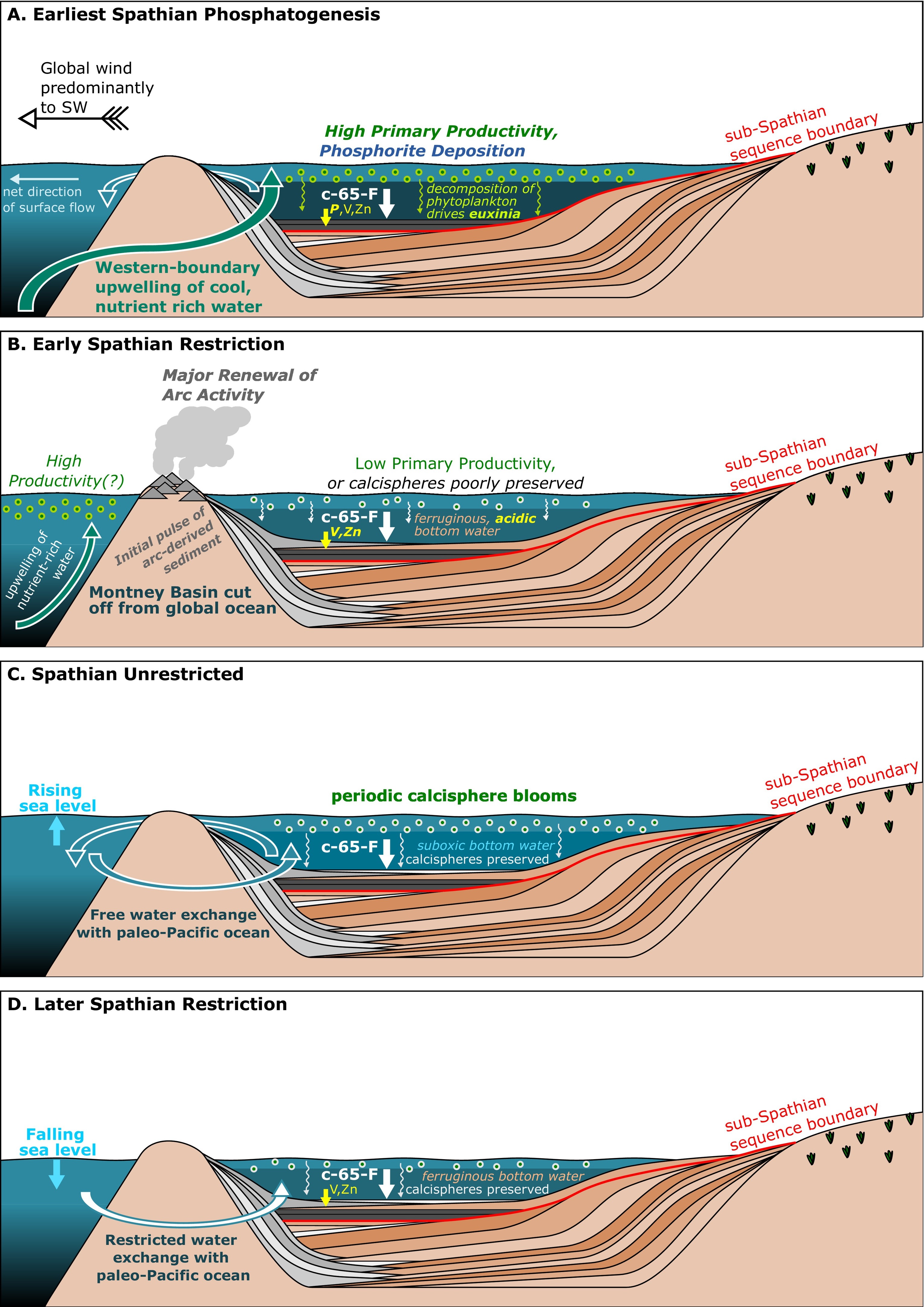
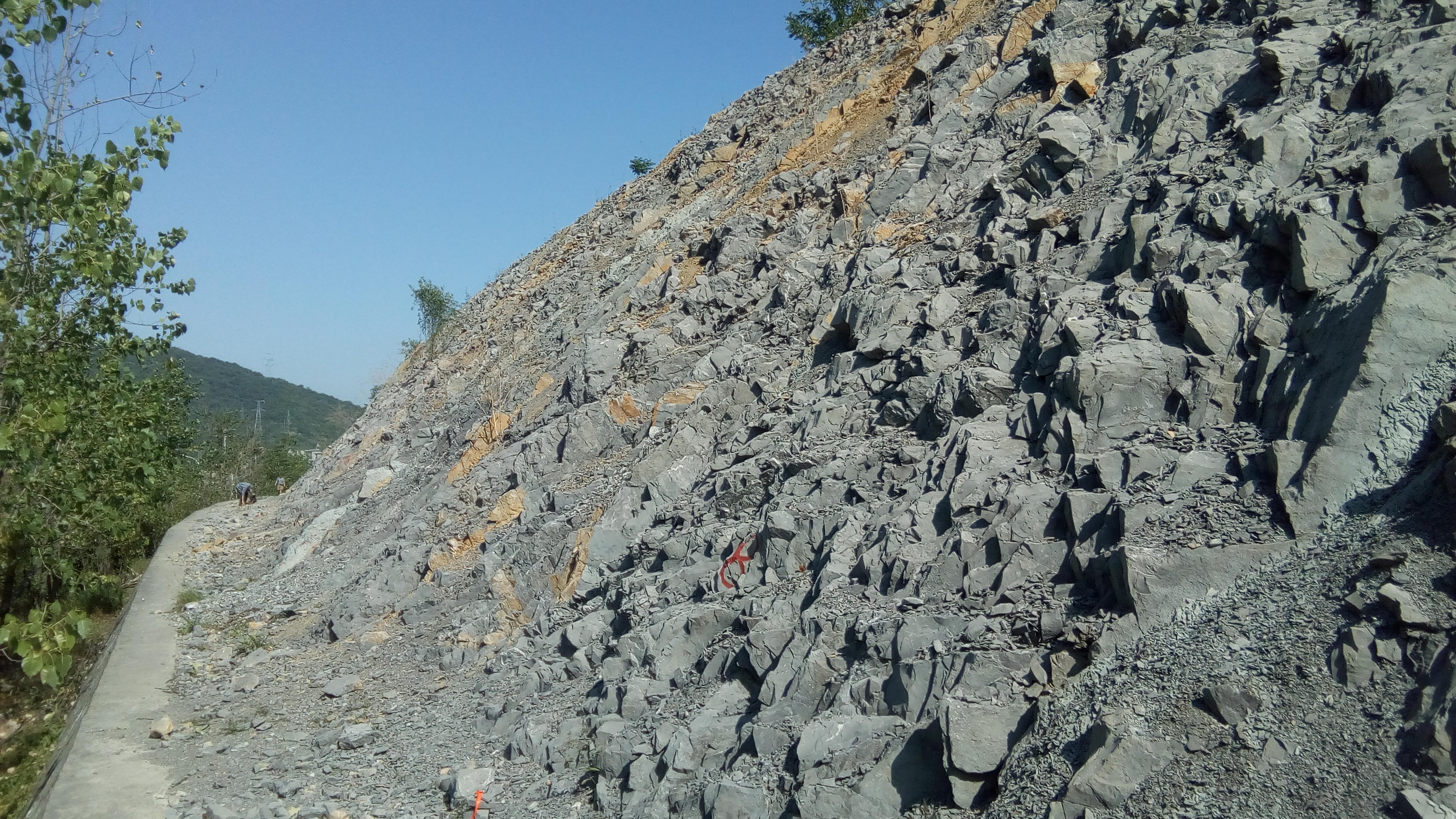
Core c-65-F, from northeastern British Columbia, is a continuous 395 meter core of the Montney Formation, an organic-rich siltstone unit deposited on the northwestern margin of Pangaea after ecosystems were irrevocably altered by the end-Permian extinction.
Measured at every millimeter with an ITRAX core scanner, with ages constrained by detailed biostratigraphy, the core provides an unprecedentedly high-resolution record of recovery from the mass extinction
Core c-65-F has yielded detailed records of sedimentary processes and ocean chemistry (PDF), carbon isotope oscillations (PDF), and has served as the basis for a revised astronomical timescale of the Early Triassic (PDF).
It has also been included in a synthesis of black shale records from across North America (PDF).