The Ediacaran-Cambrian transition is one of the most fascinating periods in Earth’s history, as an evolutionary ‘arms race’ led to expanding animal diversity and the appearance of phyla that still exist today.
Chemical conditions in the oceans may have been radically different from those that exist today, and changes in the availability of oxygen, nutrients, and trace elements may all have played a role in pacing the expansion of ecological space and diversification of animal life
I’ve had the opportunity to work on the Ediacaran-Cambrian transition in two regions of the ancient ocean. The first of these is the Yangtze Block, in southern China, where results indicate that oxygenation of the oceans was a slow and stepwise process, where the growing reservoir of trace metals (PDF, PDF), and their control of the nitrogen cycle (PDF), may have been key triggers of the Cambrian Explosion.
The second region is right here in North Carolina, where the Piedmont contains metamorphosed sediments associated with the Carolina Terrane. These sediments, deposited on the flanks of an offshore volcanic arc, are a record of conditions in the Iapetus Ocean immediately prior to the Cambrian Explosion.
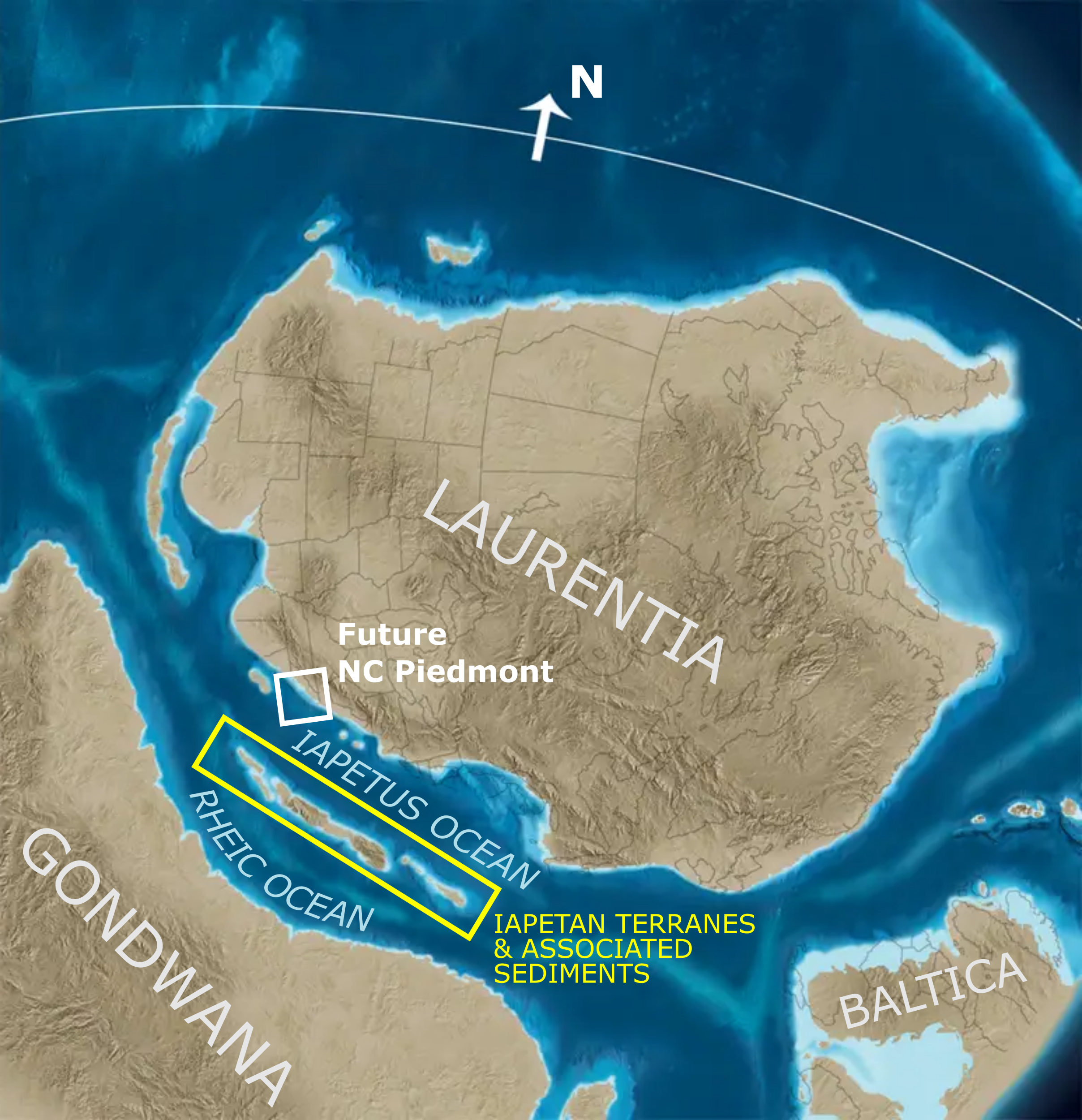
Considering their age and tectonic history, these sediments are remarkably well preserved, and include recognizable sedimentary structure on a millimeter scale (the slimy algal mats that covered many sediment surfaces in the Ediacaran may have helped to preserve these). Ongoing work focused on applying geochemical tools to this unique suite of metasediments, to try to understand changes in ocean chemistry at the time of deposition.


 Shane D. Schoepfer